Mahjong Solitaire
MobilityWareCard
4.610.05K Reviews
- Version
- 2.6.0.1996
- Installs
- 5.00M
- Age Rating
- Everyone
Screenshots
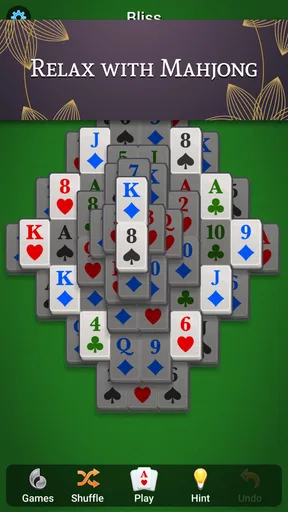
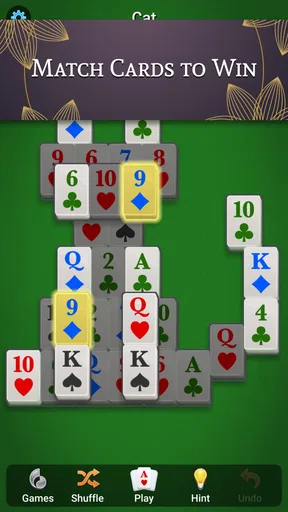
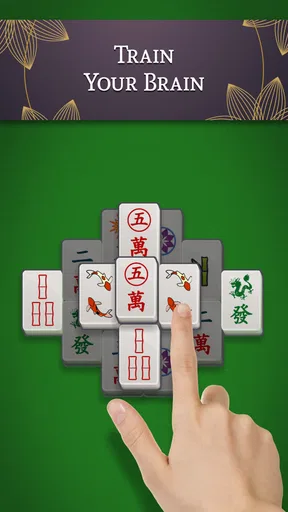
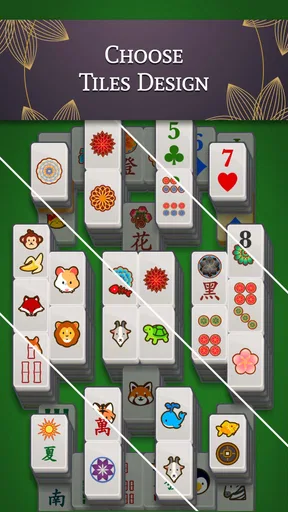
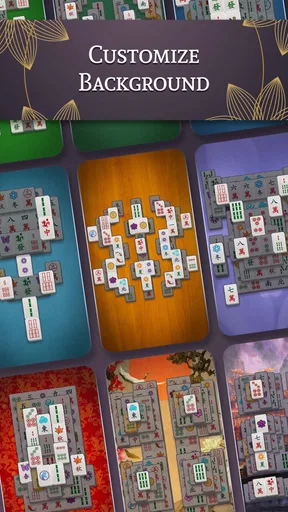
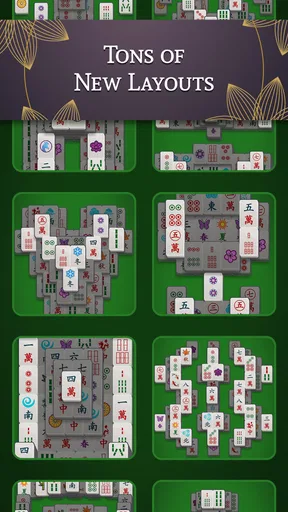
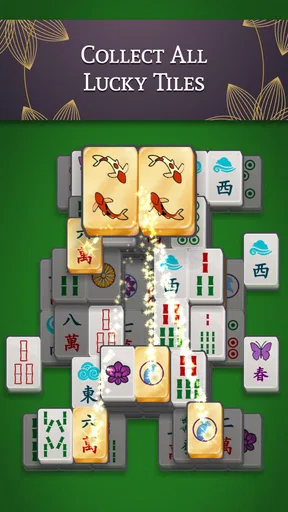
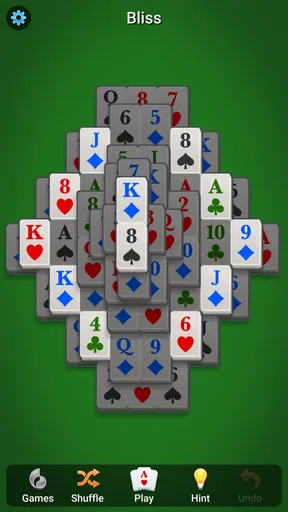
Our Review of Mahjong Solitaire
 Analysis by Appyee
I picked up Mahjong Solitaire from MobilityWare expecting a familiar tile-matching game, and that is exactly what it delivers: a calm card-style puzzle built around finding matching Mahjong tiles. It is free to start, easy to understand, and much more suitable for short breaks than for players looking for a large adventure or a competitive multiplayer experience. After spending time with it, I see its main appeal in the simple decision-making loop: scan the layout, uncover useful tiles, and avoid removing a pair that you may need later.
That simplicity is also the reason to be selective. This is not a game that tries to bury the basic puzzle under a complicated story or a long list of systems. If you enjoy traditional Mahjong Solitaire and want a straightforward version on a phone or tablet, it makes sense. If you need constant novelty, deep strategy, or a more social card game, the experience may feel limited sooner than you expect.
What you get before spending anything
The most important value point is clear: the game is free to download and play. That makes it easy to test without committing money first. Optional in-app purchases range from $1.99 to $29.99 per item, so the free entry and the paid extras should be treated as two separate questions. You can decide whether the basic experience is enjoyable before considering any purchase.
I appreciate that distinction because Mahjong Solitaire is the kind of game where the core activity can be judged quickly. You do not need to invest hours learning a complicated ruleset. A few layouts are enough to tell whether matching tiles and planning around blocked pieces are relaxing for you or simply repetitive. My advice is to play it as a free game first and only think about spending if a paid option solves a problem you actually have.
The game is rated for Everyone, which fits the accessible rules and gentle presentation. It also runs on Android 8.0 or later, making it available to people using a range of older and newer Android devices. On my side, that matters more than flashy graphics: a puzzle game designed for quick sessions is more useful when it does not demand a recent phone just to open reliably.
The current version is 2.6.0.1996. That version detail is useful when checking compatibility or comparing the installed build with what is available in the app store. MobilityWare has also established a sizeable audience around the game, with more than five million installs and a 4.6 average from roughly one hundred ten thousand ratings. Those figures do not guarantee that every player will enjoy it, but they do suggest that the basic format has broad appeal.
A familiar puzzle with more planning than it first appears
At a glance, the rules seem almost automatic. You look for two identical, available tiles and remove them together. The catch is that a tile can be hidden beneath another or blocked by surrounding pieces, so every match changes what can be reached next. That creates a small but meaningful planning problem. The best move is not always the pair that is easiest to see.
I found the most useful habit was to pause before making an obvious match. First, I scan the layout for duplicate tiles and note which ones are currently accessible. Then I consider whether removing one pair will open a buried tile, expose a second copy, or leave an awkward single tile stranded. This takes only a few seconds, but it makes the game feel less like random tapping and more like a compact logic exercise.
That approach is especially helpful on a phone, where the visible board is smaller and it is easy to lose track of what has been uncovered. I often work from the outside toward the center, while keeping an eye on pairs that appear in more than one location. Clearing a tile simply because it is available can be a mistake if its matching partner is the key piece needed to unlock another section.
One of the less obvious trade-offs is that relaxed play and careful play feel quite different. If I rush, the game becomes a repetitive search for matching pictures. If I slow down, I start treating the board like a short sequence of choices. Players who want to improve should focus less on speed and more on preserving options. A move that opens several future possibilities is usually more valuable than one that only removes tiles immediately.
How it fits into an ordinary day
This is a good example of a game that works in small pockets of time. I can imagine opening it while waiting for an appointment, taking a short break between tasks, or winding down without wanting the emotional intensity of a competitive game. The rules are simple enough to remember after a long gap, so it does not punish you for playing irregularly.
A realistic routine would be to play one or two layouts during a commute or after dinner, then stop without feeling that you have abandoned a large campaign. That low commitment is a genuine strength. Many mobile games try to turn every session into a daily obligation, while this one is easier to approach on your own terms.
It also suits players who like visual sorting and quiet concentration. I would recommend it to someone who enjoys crossword puzzles, simple solitaire, or organizing tasks but does not necessarily want a timer or a leaderboard pushing them forward. The matching action is familiar, yet the blocked-tile structure gives it enough thought to keep a short session from being completely mindless.
On the other hand, people who need a strong sense of progression may find the format too narrow. The central pleasure comes from solving layouts, not from exploring a story, building a character, or mastering a large collection of cards. If your ideal mobile game is a strategic card battler with opponents, deck construction, or long-term planning between matches, this is the wrong kind of card game.
Where the free value is strongest
The free access is most valuable for casual players who want a dependable puzzle rather than a major hobby. You get a focused activity that can fill a few minutes without requiring a tutorial-heavy commitment. The game’s age rating also makes it a reasonable choice for households looking for an uncomplicated matching title, although adults should still make their own decisions about optional purchases.
Another strength is the low mental overhead. I do not have to remember a complicated inventory, maintain a deck, or prepare for another player. The board is the whole problem in front of me. That makes the game useful when I want a little concentration but do not have enough energy for something demanding.
There is also value in the way the puzzle rewards restraint. The game can train a practical habit: before choosing the first available option, look at how that choice affects what remains. That lesson applies beyond the board, but I would not oversell it as a serious training tool. Its benefit is modest and informal, coming from repeated small decisions rather than from a structured educational program.
For me, the best free use case is a short, repeatable break. I would not choose it as the only game on my device, but I would keep it available for moments when I want something familiar and quiet. That is a narrower role than a full-featured entertainment app, yet it is a useful one.
What may reduce the value
The biggest limitation is the narrow core loop. Matching tiles is satisfying when I am in the mood for it, but the same focus can become predictable. Players who expect every session to introduce a new mechanic may feel that the game is asking them to repeat one type of puzzle for too long.
There is also a difference between being free and offering unlimited value for every player. The free entry lets you evaluate the game, but the presence of optional purchases means some people will need to decide where they draw their spending line. I would avoid buying anything simply because it is available. First identify whether it improves a part of the experience you genuinely use; otherwise, the free version is the sensible stopping point.
The purchase range reaches $29.99 per item, which is a meaningful amount for a casual puzzle. That does not make every purchase poor value, but it does make comparison important. A player who only opens the game occasionally may get more enjoyment by staying with free access, while a frequent player may consider a paid option differently. The right decision depends on use, not on the game’s popularity.
Another friction is visual attention. Mahjong tiles can look similar, especially when the board becomes busy or when I am playing quickly on a smaller screen. I have had better results by reducing my pace and checking the full layout before tapping. If you prefer games with large, unmistakable symbols and immediate feedback, this style may feel more tiring than relaxing.
It is also not the best choice for people seeking social interaction. The attraction here is personal problem-solving. Friends can discuss strategies or take turns informally, but the game itself should be approached as a solo puzzle rather than as a substitute for a multiplayer card table.
Practical ways to play more thoughtfully
My first tip is to identify the pairs that are doing structural work. A matching pair may look ordinary, yet one copy can be covering several important tiles. Before removing it, I check whether another accessible pair could open the same area with less risk. This simple comparison prevents the common mistake of clearing the most visible match and discovering that the remaining layout is harder to manage.
My second tip is to keep track of exposed singles. If I see one tile whose match is buried or blocked, I remember its position rather than immediately trying to clear everything around it. That changes the way I read the board: I am not just looking for what can disappear now, but also for what needs to become available later.
A third useful habit is to separate scanning from tapping. I first survey the upper and outer portions of the layout, then decide on a small sequence of moves. This reduces accidental choices and makes it easier to notice when a pair has become available. It is particularly helpful during a quick session, because rushing often creates the illusion that there are fewer options than there really are.
I would also play in short blocks if the puzzle starts feeling repetitive. Taking a break preserves the relaxing quality better than forcing a long session. When I return later, the board tends to feel fresh enough to solve again. That is a practical way to get more value from a focused game without expecting it to provide the variety of a larger card collection.
How it compares with other card and puzzle choices
Compared with traditional solitaire, this game is more visual and spatial. Solitaire asks me to manage sequences and suits, while Mahjong Solitaire asks me to read layers, access, and matching symbols. Someone who enjoys arranging cards into ordered stacks may prefer classic solitaire because it offers a different kind of planning. Someone who likes clearing a cluttered board will probably find the Mahjong format more immediately appealing.
Compared with competitive digital card games, the mood is much calmer. There is no need to study an opponent, react to a changing meta, or spend time assembling a deck. That makes it easier to play casually, but it also means there is less strategic variety outside the current layout. Players who want a game that grows with them over months may get more depth from a deck-building or strategy title.
Compared with other tile-matching games, the important distinction is the blocked-board structure. Many matching games emphasize quick chains, colorful effects, or score chasing. Here, the satisfying moment comes from exposing a useful tile and making the next section of the board accessible. I prefer this when I want to think, but players who enjoy fast reactions and constant visual rewards may find it too restrained.
That comparison helps clarify the purchase decision. You are not paying for a broad entertainment platform; you are choosing a particular kind of quiet puzzle. If that specific rhythm fits your habits, free access already provides a credible reason to keep it installed. If you are hoping for the variety found in several unrelated card games, another app may offer better value for your time.
Who should install it, and who should pass
I think it is a strong fit for casual puzzle fans, people who enjoy classic Mahjong Solitaire, and anyone who wants a solo game that can be started and stopped easily. It is also suitable for players who prefer learning through a familiar rule rather than reading a long explanation. The Everyone rating and Android 8.0 minimum make the basic audience broad, while the free starting point keeps the trial low-risk.
I would be more cautious about recommending it to someone who dislikes repetition, wants a narrative, or expects substantial multiplayer features. It is also a poor match for players who become uncomfortable with optional spending prompts in free games. In that case, a fully paid puzzle with one clear price may feel more comfortable, even if its initial cost is higher.
For a frequent player, the question is not whether the game works; it does. The question is whether solving more Mahjong layouts remains enjoyable after the first novelty fades. I would suggest paying attention to how often you return without feeling obligated. If you naturally open it when you have a few spare minutes, it is delivering useful entertainment. If you keep searching for a different mode or a stronger sense of progress, that is a sign to move on.
My final recommendation
Mahjong Solitaire is a focused, accessible card-style puzzle that earns its place through simplicity rather than ambition. MobilityWare has made a version that is easy to try, comfortable for short sessions, and capable of rewarding careful choices. Its 4.6 average from around one hundred ten thousand ratings reflects broad player approval, and I can understand why: the basic loop is familiar, readable, and pleasantly low-pressure.
My recommendation is to install it if you want a free Mahjong tile-matching game for quiet breaks, then judge its value by your actual play pattern. Stay with the free experience until you know what you use and enjoy. Because individual purchases can cost as much as $29.99, I would only consider spending when a paid option clearly improves your regular routine rather than simply extending a momentary impulse.
My honest verdict: try it for free, keep it if the slower planning feels satisfying, and skip it if you need variety, competition, or a deeper card-game system. It is not trying to be all of those things, and its success depends on whether its single, carefully paced puzzle loop is exactly what you want.
Verdict
Strengths of Mahjong Solitaire
- Easy-to-learn rules make it suitable for casual players of all ages.
- Short rounds work well for quick breaks or relaxing before bed.
- Multiple tile layouts provide variety beyond the classic board.
- Offline play is convenient when traveling or without an internet connection.
- Gentle gameplay can help improve visual matching and concentration.
Limitations of Mahjong Solitaire
- Some layouts may depend heavily on the initial tile arrangement.
- Undo hints or shuffle options can reduce the challenge for purists.
- Repeated tile designs may feel visually similar after extended play.
- Progression can become repetitive without substantial new game modes.
- Small tiles may be difficult to distinguish on compact phone screens.
Other Releases by MobilityWare
View All

Similar Picks in This Category
View All
Solitaire - Classic Card Games
MobilityWare4.6

UNO!™
Mattel163 Limited4.3

Spider Solitaire: Card Games
MobilityWare4.6

Solitaire.com - Classic Cards
Tripledot Studios Limited4.7

Plants vs. Zombies™ Heroes
ELECTRONIC ARTS4.1

Hearthstone
Blizzard Entertainment, Inc.4.1
Frequently Asked Questions
What is Mahjong Solitaire, and how is it different from traditional Mahjong?
Mahjong Solitaire is a single-player puzzle game inspired by the classic Mahjong tile set, but it does not use the same rules as the multiplayer table game. Your objective is to remove matching pairs of identical, free tiles from a layout until the board is cleared. It is primarily a game of observation, planning, and pattern recognition rather than betting, competition, or tile-based combat.
Is Mahjong Solitaire suitable for beginners?
Yes, Mahjong Solitaire is generally very accessible to beginners. The game usually explains its basic rules quickly: select two matching tiles that are not blocked by other tiles and remove them. Early layouts tend to be simple, while later puzzles introduce more complex arrangements. Helpful features such as hints, tile shuffling, undo options, and restart controls can also make the learning process less frustrating.
Can Mahjong Solitaire be played without an internet connection?
In many versions, the main Mahjong Solitaire puzzles can be played offline after the application has been installed. This makes it convenient for travel, commuting, or relaxing in places with limited connectivity. However, certain features may require internet access, including advertisements, cloud synchronization, daily challenges, leaderboards, in-app purchases, or downloading additional puzzle packs. Exact offline availability depends on the specific version.
Does Mahjong Solitaire contain advertisements or in-app purchases?
Many Mahjong Solitaire apps are free to download but support themselves through advertising and optional in-app purchases. You may encounter banner ads, full-screen advertisements between puzzles, or rewarded videos that provide hints or extra features. Some versions offer a paid option to remove ads, unlock tile designs, access more layouts, or receive additional tools. Check the store listing before downloading if this matters to you.
What should I check before downloading a Mahjong Solitaire app?
Before downloading, review the app’s ratings, recent user feedback, update history, required permissions, privacy policy, and compatibility with your Android or iOS device. It is also worth checking whether the game includes offline play, hints, undo functions, accessibility options, and a large selection of layouts. Confirm how advertising and purchases work, especially if children may use the device or if you prefer a distraction-free experience.
Play our best games!


